Labels

About Me

My photo
Victoria Uni, First Year Design Blog.
Showing posts with label precedence. Show all posts

Wednesday, 23 May 2012

DSDN144 - Project 3 - Precedence


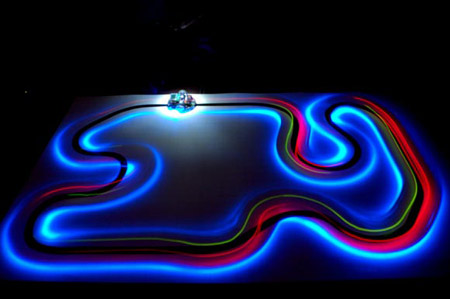
This shot further enforces my idea of using the lights in the shooting environment to create light trails. The above picture is of a slotcar set. The track itself has no light but because of the movement of the lights on the slotcar the track still exists by the representation of light.

Tuesday, 22 May 2012

DSDN144 - Project 3 - Precedence


Dave Hill is a commercial photographer who specialises in commertial photography. This photo is from his promotional series "adventure". The way the effect exagerates the photo to the point of fantasy is an intersting aesthetic. I would like to use this technique to help exagerate my light trails in my photo series.

Tuesday, 15 May 2012

DSDN101 - Project 3 - Precedence

 Jacque Fresco and The Venus Project 

"The Venus Project offers a comprehensive plan for social reclamation
in which human beings, technology and nature will be able to
coexist in a long term, sustainable state of dynamic equilibrium" - The venus project's website  

The Venus Project and its founder industrial designer Jacque Fresco are preaching sustainability in the form of offering a parallel system to democracy. By being an industrial designer himself, Fresco understands fully the importance of sustainable design. A prime example is his design for a self energy generating bullet train. It is this exact way of thinking and applying it into all design processes that i am trying to convey in my animation. 

DSDN101 - Project 3 - Precedence


David Suziki

"Economists don't include all of the things that nature does for us for nothing. Some technologies would never be able to do what nature does. For example, pollinating all of the flowering plants. What would it cost us to take carbon dioxide out of the air and put oxygen back in, which all the green things do for us for nothing? It's possible to do a crude estimate of what it would cost us to replace nature. Well, it turns out, [one researcher] estimated it would cost us $35 trillion a year to do what nature is doing for us for nothing. Now to put that in perspective. If you had added up all of the annual economies of all the countries in the world at that time, it would come to $18 trillion. So, nature is doing twice as much service for us as the economies of the world. And in the madness of conventional economics, this is not in the equation." —David Suzuki, geneticist and broadcaster.

Suziki has offered a bottom line to the world by saying we cannot afford to replace nature. I find this face very chilling and will try to include parts of the above quote in my animation to drive home the importance of sustainability in design. 

DSDN101 - Project 3 - Precedence


These products are a common site around campus and not only are they they amongst the most popular laptops on the market today but one of the greenest. Apple is taking steps towards not just becoming a carbon zero company, but making sure its products are as close to bio degradable as the technology allows. The Apple designers should be taken as major role models to us as design students. Not just for their close to perfect aesthetic designs but for the way they are looking towards the future of sustainable design. They will be used as one of the key information examples in my animation. 

DSDN101 - Project 3 - Precedence

Kaboom by PES

I find this stop-motion by the animation artist PES to be a very effective animation by the way he uses semiotics. The animation itself is a reenactment of the Hiroshima bombing in world war two. PES uses various household objects to make up the animated models. These objects are of very little relevance to the context of the story but somehow the viewer gains a clear view of what the animation is about as animation transforms them into symbols we relate to as the viewer. This use of semiotics is something i would like t o replicate in my animation as it is another metaphor for "Seeing differently" and would give my animation its self more depth and help enforce my messages in my animation.  

DSDN144 - Project 3 - Precedence


Cenci Goepel and Jens Warnecke

These collaborative works by Cenci Goepel and Jens Warnecke form a series of photographs that contrast former light graffiti. Their work seeks to harmonize the light with the surrounding frame of nature. I feel they successfully create this aesthetic and i will use this idea to make my own light painting photos homogenize themselves with the surrounding environment in order to create a successful aesthetic of light architecture. 

Monday, 14 May 2012

DSDN101 - Project 3 - Precedence

The 11th Hour - Motion Picture

The 11th hour is a motion picture, produced my Warner Brothers that investigates our effect on the environment as human beings. It goes into details about how the resources we consume are not being sustained. As well is illustrating the problems associated with the way mass production consumes our resources it also gives valuable solutions to the way designers think about the materials they use. This is an attempt to create a consciousness for where the materials used in products are coming from and where they will end up once used amongst consumers. I will use these ideals to attempt to raise awareness of sustainability in my animation to produce "A new way of seeing" amongst industrial designers.

DSDN144 - Project 3 - Precedence

 Pablo Picasso Light Painting

One of the most influential artists of the 20th century, Picasso, was also a pioneer of light writing with a slow shutter speed. In his later life Picasso experimented with light writing on his own in front of the camera scribbling brief and simple forms. The expressionist aesthetic picasso has achieved just through experimenting is something i would like to replicate in my next shoot. I believe i will be able this aesthetic to connect with the audience and allow them to easily understand the forms i will create in each frame. 


Sunday, 6 May 2012

DSDN144 - Project 2 - Contact Sheet - Pinhole Shoot

As you can see above, i was unable to achieve a good point of focus using the pinhole lens. I know will have to re-shoot everything at night to compensate for the long shutter speeds i will be using.

DSDN144 - Project 2 - Precedence - Justin Quinnel


Justin Quinnel has experimented with pinhole photography over the last decade and has capture many images including the ones above. I will attempt to use pinhole photography for my series as i will be using low shutter speeds during the day. Due to the amount of light coming onto the sensor during the day i need to use a small aperture to compensate for the long shutter times. Pinhole lens will be perfect for this and i will attempt to create one using an old body cap of my camera.

Tuesday, 1 May 2012

DSDN144 - Project 2 - Precedence - Arthur Fellig


Arthur Fellig was a photographic journalist know for his stark black and whit photos depicting real life scenes in New York during the 30s - 40s. I believe the greyscale of his aesthetic gives interest to these seemingly normal scenes. By using this asthetic of greyscale in my work i will be able to question the normality of peoples interactions with spaces over time.

DSDN144 - Project 2 - Precedence - Henri Cartier-Bresson


Candid photography, such as Carter - Bresson's work above is part of the aesthetic i will need to reflect in my own work. It has the ability to stay true to the scientific nature of how people intereract with space naturally, with out interference of the camera. In order to document natural foot traffic over time the shots will have to be almost candid, as if they people being photographed dont or wont know they are on film.  


DSDN 144 - Project 2 - Precedence - Etienne-Jules Marey


This photo, titled "chronophotographic studies
of a run" was taken from one of Etienne-Jules Marey's scientic works on the physiology of the human body. Marey was a physiologist as opposed to a photographer and used these photos as scientific evidence of how the human body works in motion. I find this asthetic interesting and i will attempt to replicate the documentation process in the way i present my photogaphic series. 

DSDN144 - Project 2 - Precedence -Eadweard Muybridge


A series of frame by frame step sequences depicting motion by Eadweard Muybridge, a British photographer best known for pioneering "Animal Locomotion" as displayed in the third picture. I find his works to be a derived form of chronophotography as similar outcome is achieved in terms of displaying motion over time. This is a very two dimensional method, however i feel it has many aspects i can attempt to derive in my own work such as the use of grey scale, silhouettes and annotations to display the images as formal and scientific works. 


Sunday, 29 April 2012

Dsdn144 - Project 2 - Precedence - Alexey Titarenko


Alexey Titarenko has composed a series of photos set in his hometown of St Petersberg during the early 1990s during a depression caused by the fall of communism in Russia. He sought to convey the immense sadness and unrest amoung the city using ghostly images and "attempt(ed) to show events that occurred not only here, but throughout the country - the changes, the catastrophies, and the human tragedies, which have swept this city and the people of this land.” By using similar methods i hope to be able to convey the emotions of peoples interaction with space over time in Wellington, and possible use greyscale to enhance this. 

Wednesday, 25 April 2012

DSDN 111 - Project 2 - Fluid Motion - Precedence Investigation

 Asbestos Fibers - Angular Motion

The Human Brain - Fluid Motion 

 Through lacking any instant inspiration for this project I have begun to explore organic forms that display examples of Angular and Fluid motion. The first image displays the intricate angular motion of asbestos fibers under a microscope. Similar to the intricacy of the asbestos fibers the second picture is an xray of the human brain, it to a complex form. I feel the fluidity of this form will provide a sufficient amount of means for abstraction. 
 
Picture Sources: 
 
http://www.google.com/imgres?hl=en&safe=active&client=firefox-a&hs=p4d&sa=X&rls=org.mozilla:en-US:official&biw=1280&bih=666&tbm=isch&prmd=imvnsl&tbnid=JvdGpFblw9f0YM:&imgrefurl=http://en.wikipedia.org/wiki/Asbestos&docid=-Y97YtvJtzzvGM&imgurl=http://upload.wikimedia.org/wikipedia/commons/thumb/c/c7/Anthophyllite_asbestos_SEM.jpg/220px-Anthophyllite_asbestos_SEM.jpg&w=220&h=220&ei=q7WXT-6QAY_KmAWCwailBg&zoom=1&iact=hc&vpx=206&vpy=165&dur=945&hovh=176&hovw=176&tx=84&ty=111&sig=102126465169980943602&page=1&tbnh=147&tbnw=147&start=0&ndsp=18&ved=1t:429,r:0,s:0,i:69

http://s467.photobucket.com/albums/rr33/ama-mama/?action=view&current=THEBRAINPART3.jpg&newest=1

Tuesday, 20 March 2012

101 - Research - Drawing Technique: Exploded View

An intricately detailed cross section/exploded pictorial of the London Bridge. I am looking at using exploded drawing technique for my individual work.

144 - Precedence - Freeman Patterson

Freeman Patterson is a Nature Photographer from Canada. I selected this shot as it effectively conveys the space between three rooms in a similar way i am seeking to show the space under the Seatoun Wharf.

144 - Precedence - Edward Burtynsky

Oxford Tire Pile #8
Westley, California, USA, 1999

 Shipbreaking #13
Chittagong, Bangladesh, 2000

 Edward Burtynsky's series "Oil" investigated the vast landscapes only made possible by the discovery and mass consumption of Oil. i have selected these two shots from the series as i feel he is effectively able to convey the size of a space using depth of field to integrate the foreground and background, something i have been trying to achieve in my wharf shoot.